Melissa Aylstock — Writer

Melissa's Blog Space

Writing Coaches

August24

Long-time-no-write, I know. With the birth of three grandbabies in seven months and Chris and family returning home from Alabama and then him leaving again for Iraq my life has been beyond busy. The net result being my full-time writing career got (appropriately) pushed aside in favor of family. Things have calmed down quite a bit, so “I’mmmm baaaa-accck….” and more excited than ever.

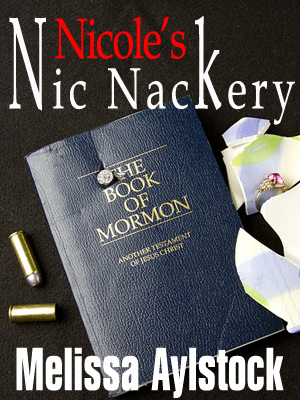
In my absence from blogging, I got notice that Granite Publishing (Orem, UT) is going to be releasing my LDS novel, Nicole’s Nic Nackery in 2011. My sister Dana offered quite a bit of help with the silly mistakes inherent in a draft and now I am having a much published writer friend help me clean up the rest of the manuscript prior to submittal.

My other writing project, Life Afterlife, is starting to take off again as well. Though I don’t have an outlet for this thriller/romance novel, I do have a writing coach who is helping me to polish the book prior to seeking a publisher who can help me break into the national market. It is exhilarating to be able to work with a professional coach who pushes me to do things I wasn’t sure I had in me. It is also helpful to my confidence that he’s even agreed to take me on. He is a prolific and successful author/screenwriter in his own right. I hope someday to “play it forward” and help other writers as well, but you’ll have to wait a bit until I actually prove myself in the broader, non-LDS, marketplace.

I’m curious, have any of you used professional coaches before? For anything?

  • Share/Bookmark

Big Goals

May24

In May of 2009 I wrote down some pretty big writing goals. Looking at that document today is both motivating and sobering.  By 2010 I’d wanted to be further along the path of having multiple books under contract; however, the fact that I have four novels written has put me much closer to the actual goal of publishing.

What I didn’t understand when I first set up my writing goals last year was that I still had a lot to learn about the craft of writing. I’ve discovered in the past year, and more specifically the past month, that just having two books published does not make me a New York Times bestseller candidate yet. I have to edit, revise, edit, revise and edit again to get my “drafts” as polished as I can. When I’m confident I’ve done my best, I need to have them read by a professional editor I trust.

I also have had to face the mirror multiple times and tell myself that my goals are still realistic, even if the time line wasn’t. Therefore, I am not changing my initial goals, but this month I am realistically revisiting them. I will also add specific daily and weekly goals that support my long-term dreams. I will keep them more prominently in front of my face and will report back to you at least once a month for accountability.

  • Share/Bookmark

Is it cheating if you write to what the market wants?

April29

David Wolverton was a workshop speaker at the recent writer’s conference I attended. He addressed writing to what the market wanted. He said you could either write for yourself or for your audience. If you want a large audience then you need to write to the reason most people read in the first place; escapism. He said there are four things that most people expect when reading or attending a movie.

One: They want to escape through wonder. The writer of blockbuster books and movies will always transport the reader to another place and time. This ability to transport readers from their ordinary lives is why Harry Potter, Twilight and Avatar have been such big successes. They delivered all that and more.

Two: The other thing those three blockbuster books/movies did was play to a global market by having characters and locations that appealed to as many countries as possible. This is not as hard to do as you might imagine. In one of my latest novels, Life Afterlife, one of my main protagonists is of Japanese heritage (which would appeal to the Asian market). I didn’t do that because I was trying to appeal to a global market but because his heritage plays a part in the central conflict. My heroine was “white-bread” American, but by just giving her a more foreign sounding name, I can appeal to the European market. I don’t even have to explain her name; by inference, the European market will feel connected to her.

Three: The story must come in high on the emotional “Richter” scale. The story must have wave after wave of conflict/resolution crashing over the reader – with just enough time between events to let the reader catch their breath.

Four: The aforementioned conflicts must appeal to a broad audience.

After attending a workshop on screenplays by Matt Whitaker, I decided I should start on the screenplay for Life Afterlife. When I originally envisioned Life Afterlife, it was as an actual movie and not a book. Mr. Whitaker said if we purchased Making A Good Script Great by Linda Seger and Story: Substance, Structure, Style and the Principles of Screenwriting by Robert McKee and followed them, we could self-teach ourselves the basics. If we wrote a great story to begin with, then Hollywood success would have more to do with the right screenwriting software and specific formatting as opposed to a degree from a college.

As the conference ended, I was so psyched. I mean, I know that with some tweaking, my novel Life Afterlife has the potential to be picked up as a both a book in the national/international market and screenplay.

I am going to re-edit my other books to shape them for maximum success as well.

  • Share/Bookmark

Success

April26

The single most important thing I learned at the LDStorymaker’s conference is that I have what it takes to be a successful author. I know that I’ve had two books already published, but I fell into the trap of thinking that those were anomalies.

I’m not saying that my success is secured by any means, only that with the willingness to put in the hours of hard work, there is no reason for me NOT to have a NY Times best-seller. It’s not that I’m some fabulous writer, but the little secret I learned at the conference is that if you can write even a half-way decent story and you follow a few rules, you can increase your odds of success in a crowded marketplace.

I said “rules” but maybe I mean more of a “pattern.” For one, successful writers are consistently trying to hone their craft by attending writer’s conferences, then they write to their audience using time tested formulas that are available at writer’s conferences. You also meet agents, editors and publishers at writer’s conferences. I signed up too late, but had I decided to go earlier I could have had 15 minutes with an agent. How productive would that have been?

I am enormously jazzed (well, it’s tempered a bit by a head cold I caught in Utah) about revising my Life Afterlife book. I am even going to start on the screenplay when I get the book revised. The presenter’s whom I was able to talk to about Life Afterlife were very encouraging. I should be ready to resubmit a tighter book in about four weeks I think.

Once I get this published and it’s the success I’m sure it’s going to be, then I will give back by teaching at these conferences as well; part of that whole play-it-forward thing.

PS: Lenore, David was very impressed that Rob was graduating from Med School. He remembered him fondly and Matt Whitaker (screenwriter/director) remembered him as well.

  • Share/Bookmark

Naivety

April19

Naïve: inexperienced, unaware, immature, adolescent, green, raw and youthful.

This is a word that is often used when describing me. Sometimes I cringe and sometimes I hold my head up in pride-depends on my mood. I personally think that my inherent naivety about things of the world adds realism to my adolescent and young adult characters. I don’t deny that I am not a “worldly” person. My kids often chide me about being rather old fashioned. What’s wrong with having the values and morals of a softer, gentler generation?

I can’t help but give my characters these qualities as well. In fact, I probably wouldn’t know how to make them more worldly. I am too often surprised at how evil people can be sometimes. When I hear through the different media sources of the horrible things people do to other people I sometimes actually cry. It is beyond my comprehension that humans can be so evil, and I DO MEAN evil! That is something that seems black and white to me-good versus Evil.

I suppose that my naivety can become a problem when developing convincing bad guys. I just don’t want them to be as ugly as they may well be in real life. I’ve read almost all of Lee Child’s books, which I finally had to give up reading because they were so gritty and frankly, R-rated. I love Mr. Child’s writing style and I am sure that what he writes actually happens out in the real world, but sometimes things that are hidden under rocks need to stay under rocks. There is a reason that the stuff under rocks wants to avoid the light, isn’t there? I prefer my character’s and stories to live and breathe in the light of day. I also prefer to read stories that don’t live in the shadows of Satan.

How about you guys? Any thoughts?

  • Share/Bookmark

Writer’s Conferences

April16

In my last post, I mentioned I’m going to a writer’s conference. The conference I am attending is the LDStorymaker’s Conference in Provo, UT. It is a predominately Church of Jesus Christ of Latter-day Saints (Mormon) group, but there will be non-LDS editors/publishers from all over the country. As it turns out, LDS writers are currently hot stuff. I suspect this is because of the general good vs. evil story lines without the overlay of raunchy language and gratuitous sex. Some recent big names you may have heard of are: Stephanie Meyer (Paranormal – www.stepheniemeyer.com), James Dashner (Fantasy/Sci-Fi – www.jamesdashner.blogspot.com) and David Wolverton/Farland (Fantasy/Sci-Fi – www.davidfarland.net). I’d like to have my name on that list as well.

David Wolverton/Farland is going to be teaching one of the workshops I’ll be attending. Rumor has it, he was Stephanie Myers mentor. I’m planning on taking copious notes in David’s workshop. I’ll then come home and put them into practice immediately.

I’ll be riding up to the conference with a quite famous and successful fellow writer from northern California. I can hardly wait. What a treat that will be to talk shop for 12 hours. I hope I don’t drive her crazy with all the questions I have.

I’m taking my laptop, so I should be able to blog while on the road. Stay tuned!

  • Share/Bookmark

Pitching a Book

April12

Pitching a novel in person is probably the hardest thing I’ve ever done. Which seems odd to me because the elements of “pitching” are: meeting people you’ve never met before, telling that person about what you love and then discussing your latest book.

For those of you who know me, I love meeting people, love talking about writing and especially my latest novels. It seems like talking to agents or publishers would be a slam dunk, but it’s not. I get extra-ordinarily nervous when I have to make the physical contacts at writers conferences. Part of my anxiety is that I have to find them in the first place. Usually they will be speakers, so I can identify them, but then I have to catch them at a bar, or in the elevator or walking to the bathroom. Each time, I feel like I am intruding – heck, I am intruding. This is the initial thing I have to overcome. Then I know that the person whose attention I’ve attracted is only going to give me a very, very limited amount of time. There is no space for small talk. I have to drive right in. That means I have to have a prepared script. I’m more spontaneous and I feel awkward giving a 90 second recitation of the highlights of my book. I think I sound fake.

At a writer’s conference I attended earlier this year, I ran into a fellow writer. When I asked what he was working on, he gave me his “speech.” It was polished, succinct and short: however, it sounded fake. I didn’t like how perfect it was. From blogs and tips in writer’s magazines I’ve read, it seems this fellow writer was on the right track, but the personable “me” fights against this.

I’m headed to another writer’s conference next week. I hope to pitch my latest novel, Dead is a Temporary Thing. I’m going to practice with a more professional pitch until it doesn’t sound so canned. Wish me luck.

  • Share/Bookmark

The Art of Proofing

April5

Okay, so maybe the title of this blog is off. I really think that proofing anything written in English is more of a science than an art. I am also well aware that this type of English is learned in a “science” class I never took. I have met many creative writers who are in my same predicament. We love the “art” of storytelling, but abhor the science of making sure our works are technically correct. In fact, many of us are known to make up words, or ignore rules of grammar altogether when we write.

For me, there are two reasons for this. One is because I write fast and furious when I am laying a story on paper. I just let my fingers fly across the keys with wild abandon and record what it is I am seeing in my brain. This means I leave out words, misspell words, spell words correctly, but use the incorrect version (they’re – their – there). When dialoging, I am apt to type in all the little “ums” and “wells” because that is how I hear people talk. I later have to take some of them out because they do get a bit tiresome for the reader.  I refuse to take them all out because humans really do use them in everyday conversation, especially when under stress—and my characters are often under stress—after all, I write romance novels. What could be more stressful than budding male/female relationships?

The second reason is I grew up about a mile from the sands of Redondo Beach, California. High school was more relaxed—seriously and figuratively. In many of my friend’s minds, attendance was optional on beautiful days. We all missed school a lot. When we did attend, we had rather creative options for English. I do remember that one English class choice for my junior year was Comic Books as Literature. I took creative writing instead—where proper grammar and spelling were optional. Also, in my high school, senior English was not required to graduate. The net result of this was a rather limited exposure to kernel sentences and dangling participles.

My solution now? I get my college professor husband, who has impeccable English skills, to do the initial proof work. I believe his skills are due to his having been educated in the eastern United States where they seem to take things, like school, more seriously than in California. It’s funny to me that he never missed a day of high school—but then as far as I’m concerned they have lousy weather back east. It’s either hot and humid or it’s snowing.

I try to have Roger proof most of my writing before I send it out. Because he’s my biggest writing fan, he’s gracious about doing this for me. After he makes his first technical pass, I will pass it on for a content check by my sisters and a few friends. If it is a document or important email I will also run it by Roger. When I’m in a hurry, or he’s busy, I sometimes think I can avoid his extra set of eyes—but I usually find myself embarrassed in the end.

So, for me, I’m very grateful to have such a well educated, articulate husband to lean on. It doesn’t hurt that he likes my writing style either. I think we make a great team!

  • Share/Bookmark

Query Letters

March17

I think one of the hardest things for a writer to compose is a query letter. This diminutive piece of composition must profile your book in less than a page and be so engaging that the editor or agent who reads it will request your novel to read.

It can’t be too cutesy, or too self aggrandizing. Every word has to work to convey the power of your writing and illicit curiosity about your book. Every writer’s magazine I’ve ever owned has addressed how to write a query in either a full article or helpful tips throughout.  Additionally, all professional writer’s conferences will devote time to this subject matter as well. Editors teach, agents teach and successful authors teach these jam packed classes.

I am not writing this blog today to give you any hints that have worked for me—I don’t think I’ve actually figured out the formula yet. I am just noting that for me, writing a 600 page novel is easier than composing an intriguing one page summary of said novel.   

However, all that being said, I did find an article with sample letters I liked. I copied the format and came up with the following query letter draft:

Dear Mr. Somebody:

Did you have a pushy mother? You know, the kind of mom who felt completely justified in butting into your life all in the name of “helping?”

Brooklyn Brady, twenty-eight and single, has a mother who does just that—only her mother recently died and gets involved via Facebooking from the “other side.”  Brooklyn, who lived under the influence of her real invalid mother for years, is alarmed to find her new “computer” persona is contacting single men in her behalf. Is this for real, or is someone hacking into Brooklyn’s computer?

Brooklyn is first frightened, then annoyed, then intrigued with the results of this unwanted intrusion into her heretofore quiet life in Sacramento, CA. Brooklyn is further conflicted over these budding male/female relationships because of her best friend Tracy’s insistence that all men are jerks and only want one thing – based on Tracy’s own disastrous encounter with a member of the opposite sex that resulted in a pregnancy when she was just sixteen. 

As Brooklyn is forced out of her comfort zone by her interfering “mother,” she goes through a physical and mental metamorphous that makes her appeal to an ever widening circle of men—including Finn Chambers, her aloof and ultra secretive, Irish landlord.  Unfortunately, because she is painfully naive and ends up making poor choices that are usually reserved for girls in their teens, she continually puts herself in potentially dangerous situations with men .

Will Brooklyn be able to safely navigate through the development stages she missed growing up, find lasting love and most importantly, be able to figure out whether the person who has taken over her computer is a prankster or her dead mother? Will Finn, the man who comes to loves her, be able to open up despite his horrific divorce and subsequent avoidance of intimacy? Dead is a Temporary Thing explores the lives of these two fractured characters as they work, argue, laugh and eventually bond in spite of their respective skewed views of life. Readers of women’s contemporary fiction will enjoy this couple’s hit and miss efforts at connecting and delight at their experiences, struggles and insights.

 Dead is a Temporary Thing is 125,000+ words and is my sixth novel. I’ve been a part-time freelance journalist for the past fifteen years and a full-time novelist for the past year. My first two novels, CTR’s Ring and 80 Miles from Nowhere were published in 2005 and 2006 by Cedar Fort, Inc.

Please let me know if you’re interested in seeing a synopsis and three chapters or the complete manuscript of Dead is a Temporary Thing. I’m contacting a handful of editors and agents who I think might be interested in this book, and hope to find a home for it soon.

Thank you very much for your time.

Sincerely,

Melissa Aylstock

I would love feedback. Would you want to read this novel?

  • Share/Bookmark

Balance

March10

There are so many writing resources to gather amazing information from, that sometimes a writer can spend more time reading about the craft than actually writing. That being said, I found this amazing writer, David Farland, who has an e-mail blast called A Daily Kick in the Pants. I signed up a few weeks ago, then left on vacation, so I didn’t actually read many of them until the past few days. Last night I read almost all of them, and WOW! is all I have to say. The guy is spot-on with his advice. He is going to be speaking at a conference in LA next week that I wish I could attend, but mommy duties call. Brittany is due March 14th and the conference starts March 19th.

If you are a budding writer like me (lazy California speak for “like I”), you might want to get on his email list. He can be contacted at http://www.davidfarland.net/. Just a few of the subject lines are: Your Online Writing Persona, If at first you don’t succeed, What Do You Think You Are?, Can You Take Criticism?, More Criticism, etc.

It was interesting that the last two were on criticism, just when I was feeling a bit down about receiving this week’s rejection letters. He gives three reactions that an author might display in the face of rejection. The first is that you might begin to doubt yourself. The second is that you might become defensive. The third is that you might find yourself confused at who to believe; yourself or the people who have rejected you (which could be anyone from friends, relatives, writing groups or professionals).

Then he says you need to sort through what you’re hearing and decide who to listen to and who to ignore, but (and this is why I like David so much) he then goes on to say he won’t be able to tell you how to that. That is honest. I like honest. Really, David doesn’t know me from Adam (or in this case, Eve). He wants me to figure it out on my own and work from there. Spoken like a true teacher, which I understand he is. Between his sage advice and the article about Meg Cabot (over 1,000 rejection letters in three years) who I mentioned in an earlier blog, I am going to read my thanks-but-no-thanks letters as just courteous responses from professionals who didn’t connect with my work – and nothing more. I have plenty of people who really like my chatty and sometimes flawed characters and stories – I am going to assume that at some point I’m going to encounter an agent who appreciates my unique writing style as well and wants to promote my work. I’ll just keep putting my stuff out there and pray (literally) to make that connection sooner than later.

Let me know if you find David Farland’s hints helpful to you as well.

Love you all bunches!

Melissa

  • Share/Bookmark
« Older Entries

melissa_aylstock

Welcome to my website/blog. As I blog, you’re going to learn a little more about how I think and what drives me. I’ll talk about books, characters in books and how I come up with ideas. Sometimes it will be focused on writing and sometimes not. I’m not above waxing philosophical on any given day. Please enjoy your stay and feel free to comment and let me know what you think!  Melissa


Archives